The Tang dynasty poet Li Shen wrote the much-loved poem "Pity the Farmers": "Hoeing the grain at midday, sweat drips onto the soil beneath. Who knows that every grain on the plate comes from such toil?" Seeing the farmer sweating under the blazing sun, we learn to treasure every hard-won grain of rice.
This month, let's talk about 禾.
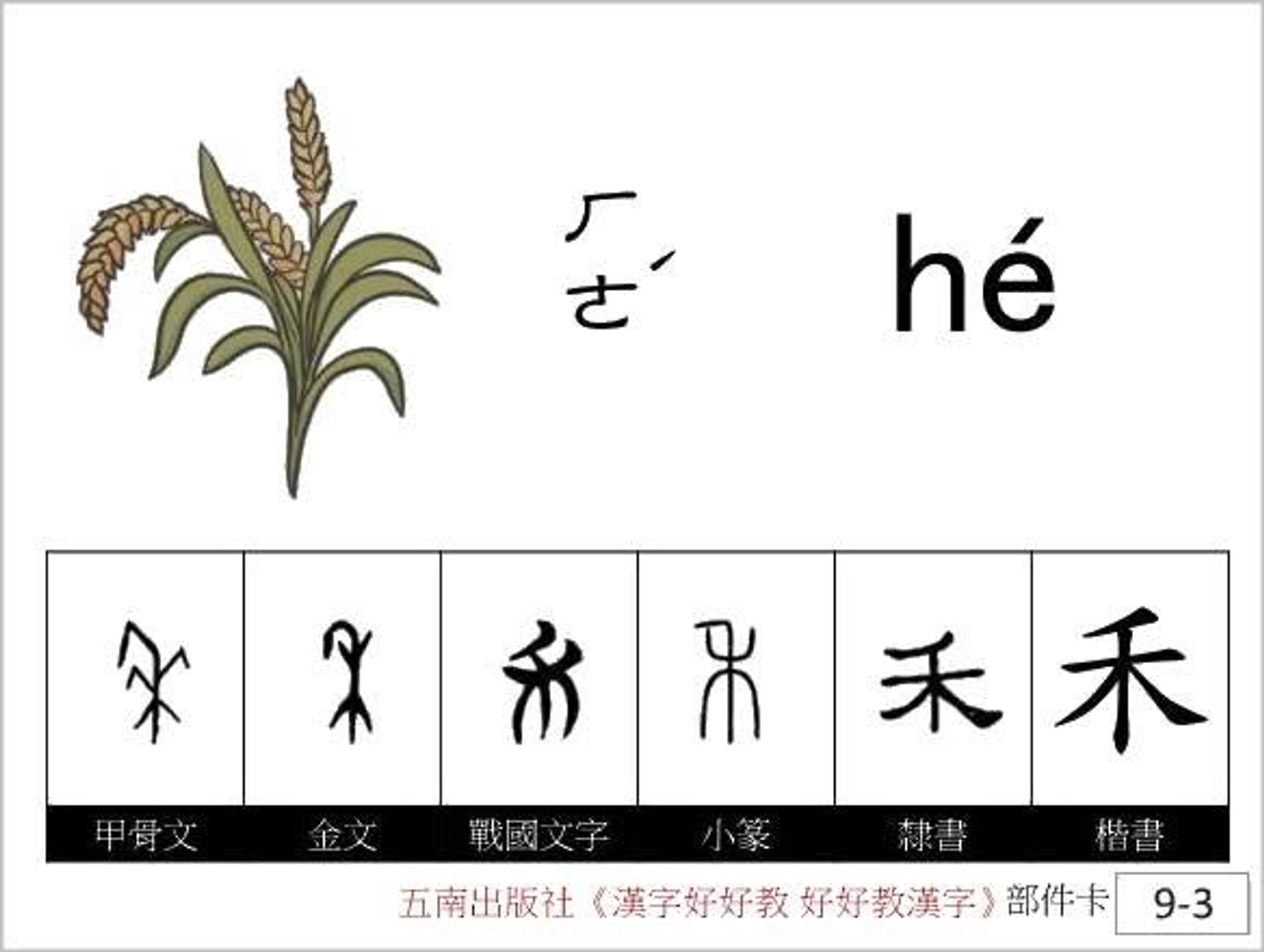
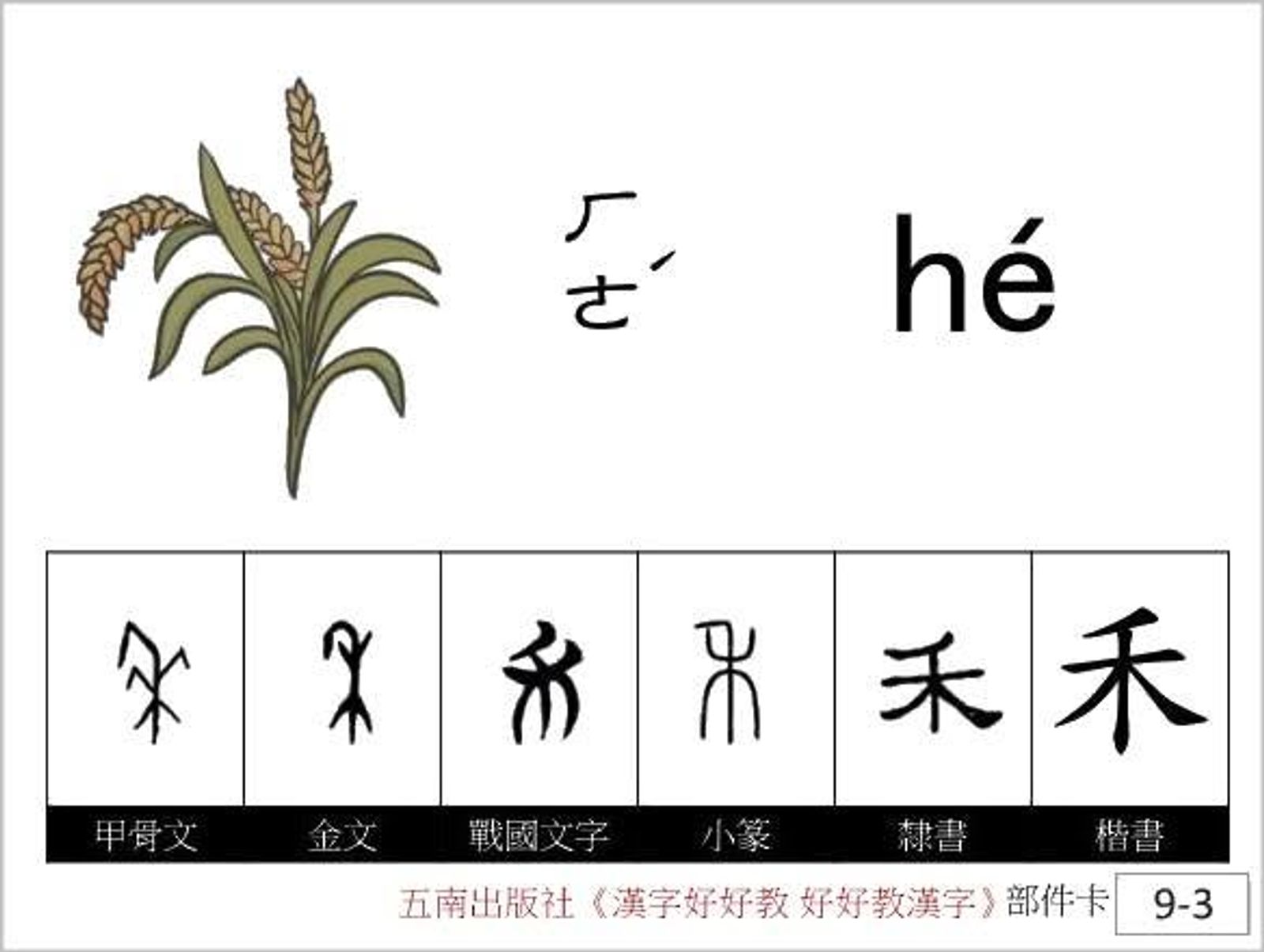
The character 禾 depicts a ripe rice plant. When rice ripens, its ears hang down, so in oracle bone script, bronze script and small seal script alike you can clearly see a drooping part at the top of the plant.
When a character contains the 禾 component, it can carry several meanings. As ripe grain, it naturally relates to rice — as in 稻 (rice), 穀 (grain), 秧 (seedling), 穗 (ear of grain) and 穫 (harvest). In ancient times rice was harvested only once a year, so 禾 is also loosely linked with things done "at regular times", as in 租 (rent), 稅 (tax) and 秋 (autumn): rent and taxes used to be paid in grain, and collected when the time came.
There is one more character that was first drawn as a person (人) carrying grain (禾) on their back, meaning a bountiful harvest or a good year. Over a long evolution its form changed so much that in today's standard script you can no longer see "person + grain". Can you guess which character it is? Take a look at the picture!
Let's learn one more component: ⺕, a right hand. If a right hand holds a stalk of 禾, what character is that?
It's 秉 (bǐng), which is why 秉 means "to hold, to grasp". And what if the hand holds two stalks of 禾? What would that mean? I'll keep you in suspense — the answer comes in a couple of days!
🌾 Today's slow living task: chew slowly, eat with care, be grateful, and treasure every grain of rice.
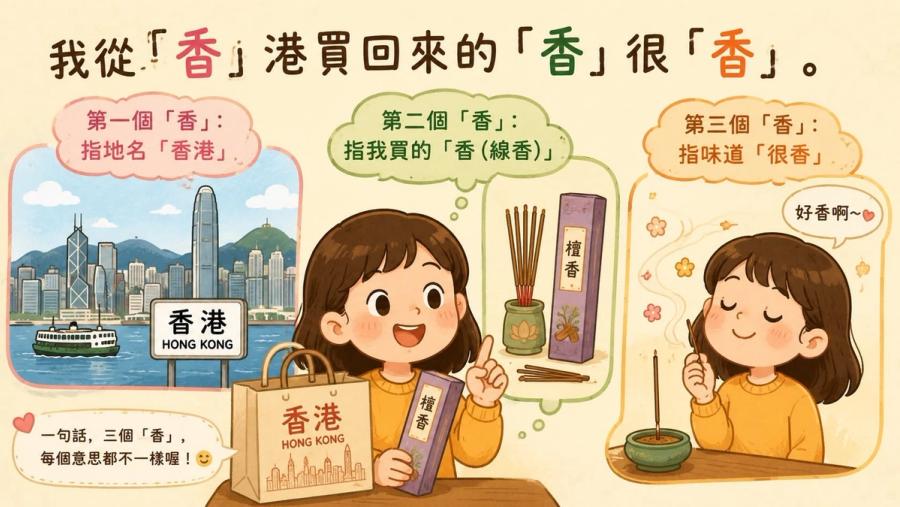
Coming next: in May we look at 香 (fragrance) — it also contains 禾. Could it be the fragrance of rice?