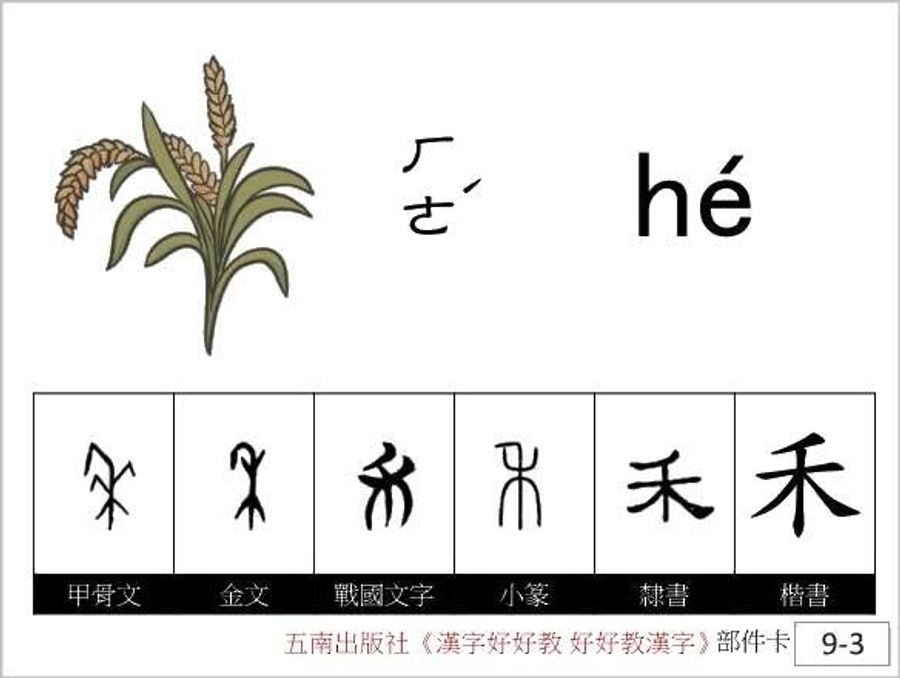
Last time we talked about 禾 and promised to write about 香 next, but May and June were so busy that it has taken until now.
The characters in previous months were all pictographs — single-component characters that cannot be broken down and express a complete meaning on their own. 香 is the first compound character we have introduced, meaning it is made up of two or more components.
Compound characters come in two kinds: ideographic compounds and phono-semantic compounds. In an ideographic compound, every component contributes to the meaning. 香, for example, breaks down into 禾 and 日 (originally 甘), and both give 香 their meanings — grain and sweetness — so 香 is an ideographic compound.
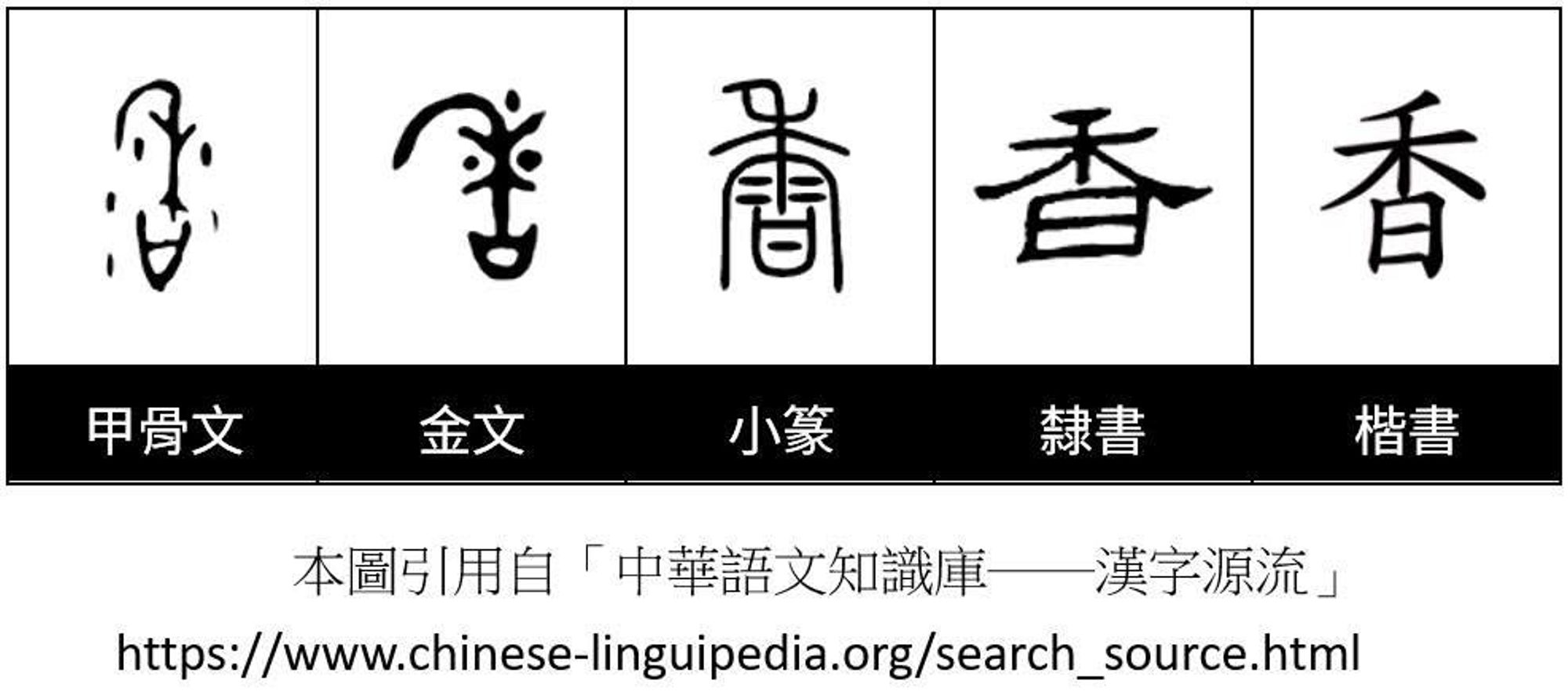
In oracle bone and bronze script, the top of 香 is 禾 (some say 黍, millet, which is made of 禾 and 水), with 口 (mouth) below and a few decorative dots. By small seal script, the Shuowen Jiezi defines it: "香 means fragrant; from 黍, from 甘." Millet is on top and the 口 below has become 甘, expressing the sweet fragrance of millet and grain. Later 甘 evolved into the shape 日, giving the form we use today.
The ancient fire offering was common: firewood and offerings were burned to worship heaven, using smoke and fragrance to communicate with the gods. The fragrant wine used in rites was called 鬯 (chàng, ㄔㄤˋ), brewed from black millet with a fragrant herb and used in ancestral temple rites and to invite the gods to descend. From this we know that fragrance has been used since very early times.
The character 香 has many meanings. Besides a pleasant smell, it also means incense — sticks, coils, cones, cakes or powders made from aromatics and burned for worship or to purify a space — something very familiar in Chinese culture. For Song dynasty scholars, burning incense was one of the four arts of living (alongside whisking tea, hanging paintings and arranging flowers): a leisurely, refined pursuit for calming the mind and composing poetry with friends, which gradually developed into the "way of incense". Today, burning incense is still a favourite pastime for many, bringing calm and ease.
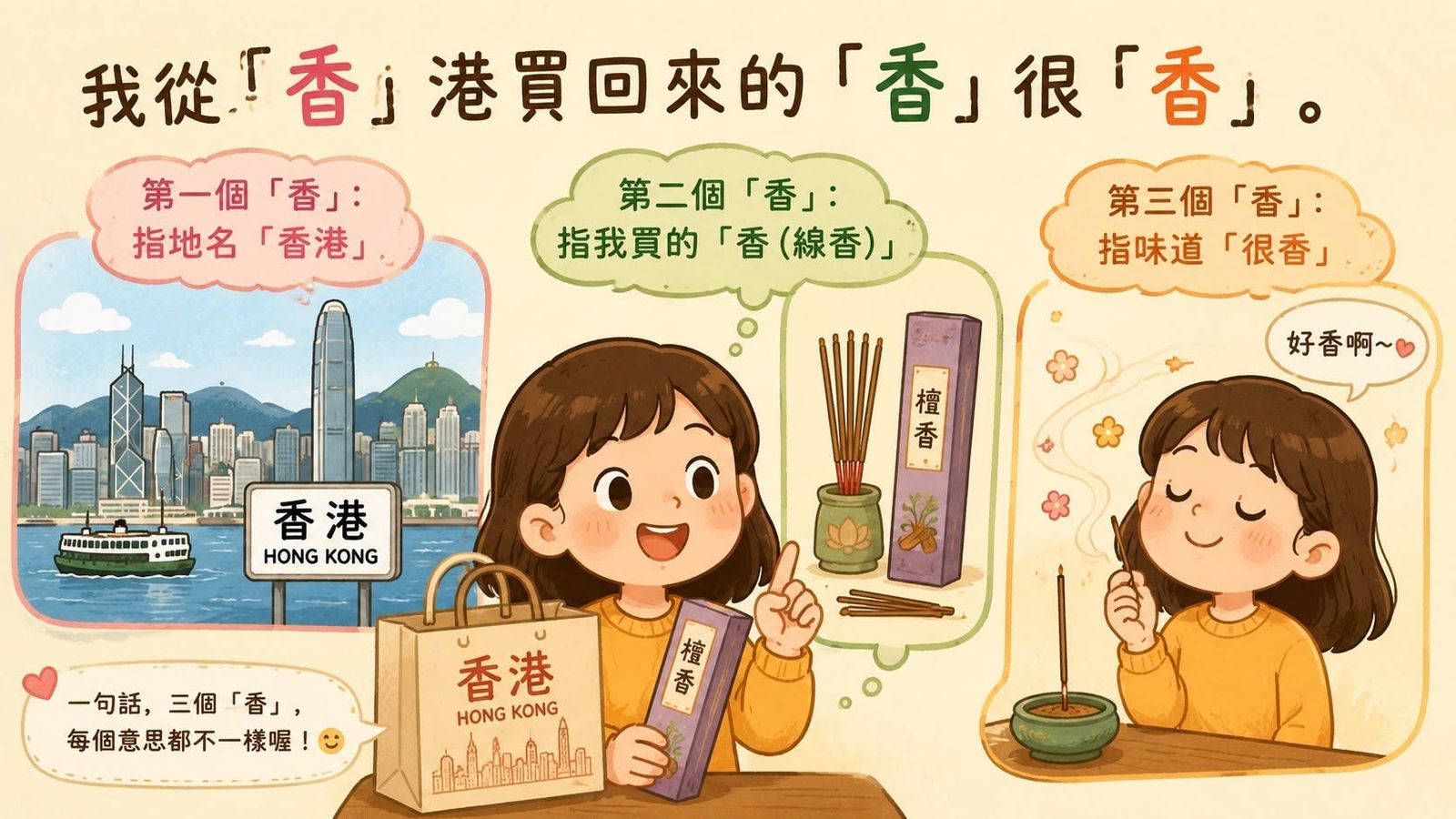
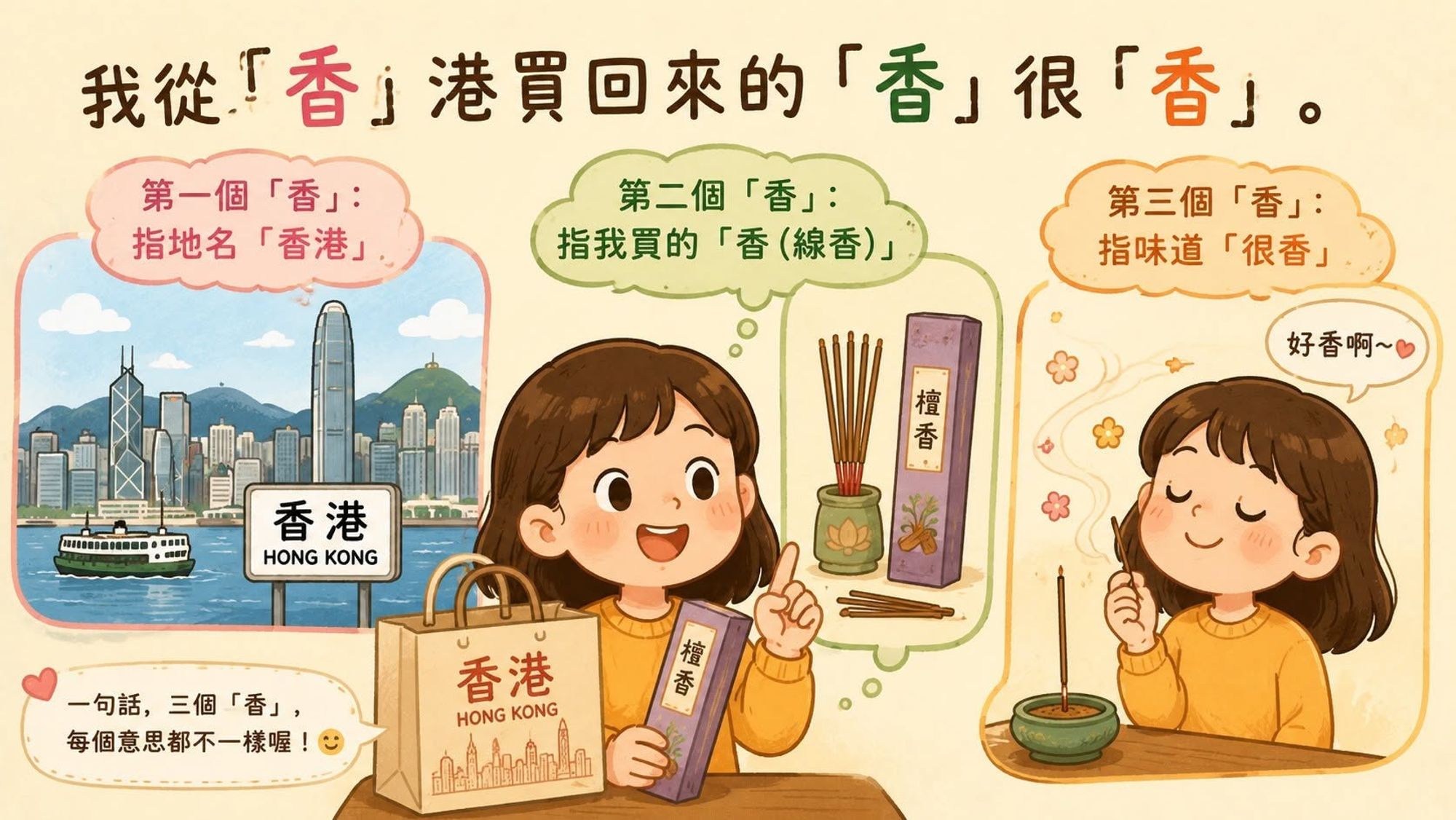
"The incense (香) I bought in Hong Kong (香港) smells lovely (香)." Read this in Taiwanese and you'll find the three 香 are each pronounced differently, because they actually carry three different meanings: the first is part of a place name, the second is incense used in worship, and the last should properly be written 芳. Southern dialects are older, and through them we can often learn more about the history of the language and its characters. Isn't that interesting?
香 is also a radical, and characters under it all relate to fragrance. Do you know any?
🌿 Today's slow living task: find a scent that makes you feel at ease — light a stick of incense, hold a bunch of flowers, or add a little essential oil — close your eyes and breathe slowly in the fragrance: in~ out~ in~ out~ and enjoy a moment of calm.
(My favourite is the scent of Taiwan red cypress — what's yours?)