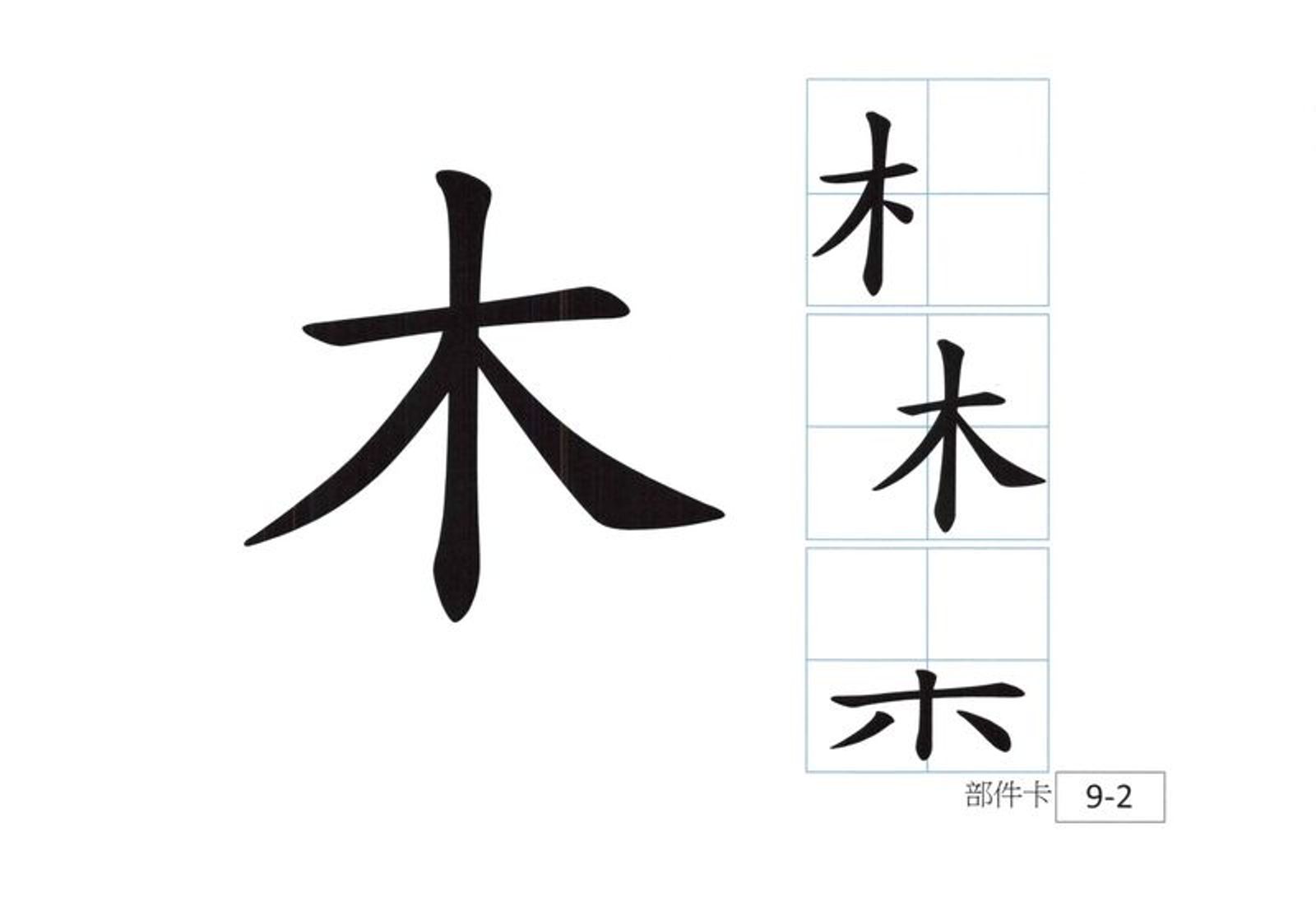
The character 木 is a tree. Throughout its evolution you can always see the trunk in the middle; above it the branches are drawn, and their direction suggests the tree's leaves and shape; below, the roots are drawn.
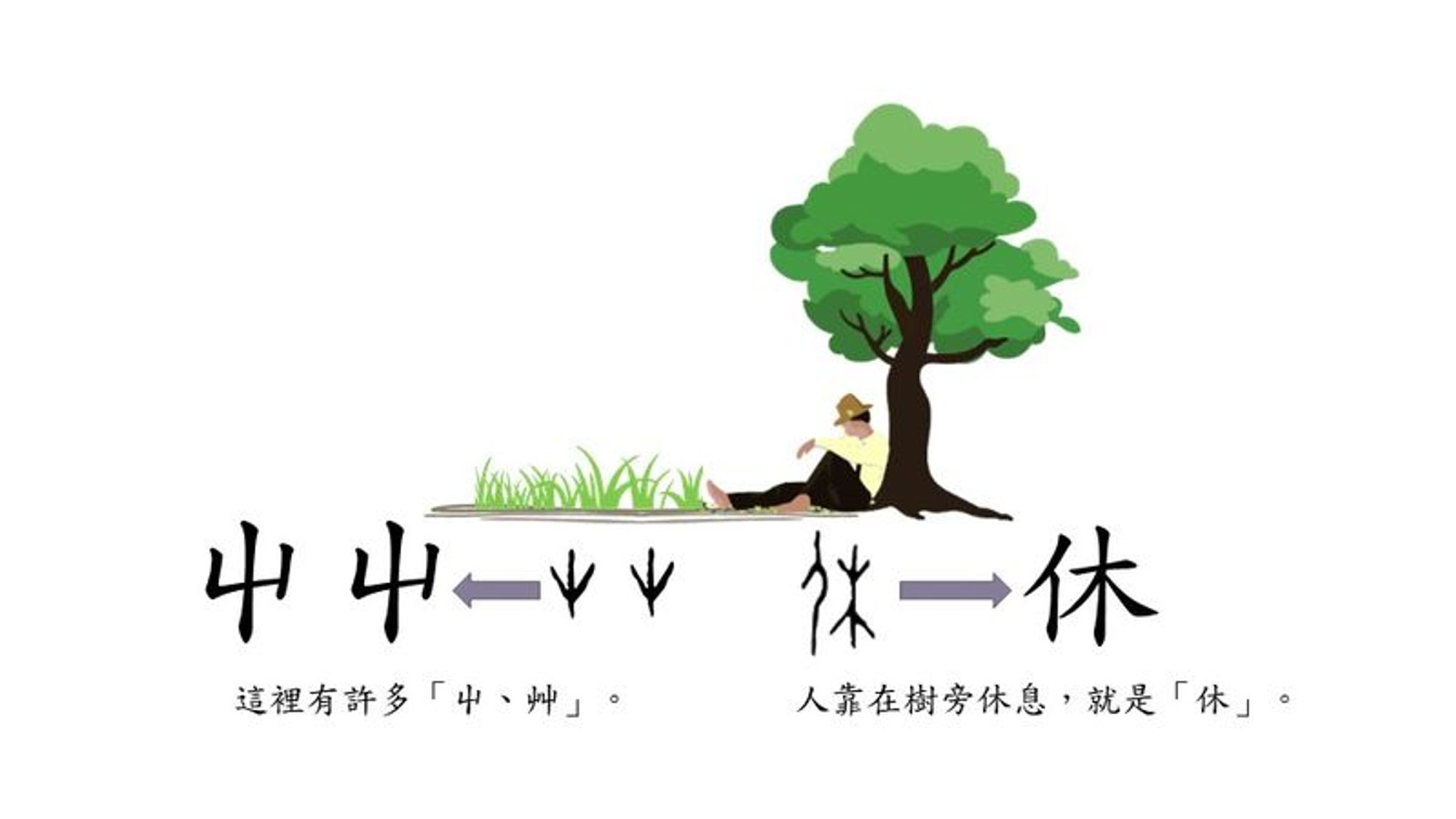
We usually can't see a tree's roots, so why did the ancients draw them in 木? Because when they created characters they tried to highlight distinctive features so that similar characters could be told apart. The difference between 屮 (a blade of grass) and 木, for example, is whether the roots are drawn.
* 屮 is pronounced chè (ㄔㄜˋ) and means a single blade of grass; 艸 is two blades of grass, and this 艸 (cǎo, ㄘㄠˇ) later became the "grass" radical in dictionaries.
A character containing 木 is usually related to trees or to wood. 李 (plum), 桃 (peach), 松 (pine), 柳 (willow) and 杉 (fir) are all tree names; 枝 (branch), 根 (root), 株 (stem), 林 (grove) and 休 (rest) all relate to trees; and 桌 (table), 椅 (chair), 杖 (staff), 柱 (pillar) and 架 (frame) were all things made of wood in ancient times.
So is 杯 (cup) made of wood too? Yes — in ancient times there were wooden 杯, used for soup. 杯 was also written 桮 or 盃. So don't explain 杯 as "a thing that is not (不) made of wood (木)" — there are still wooden cups in many places today!
🌿 Today's slow living task: find a tree you like, pick up a few leaves or petals, and press them in a book as bookmarks.
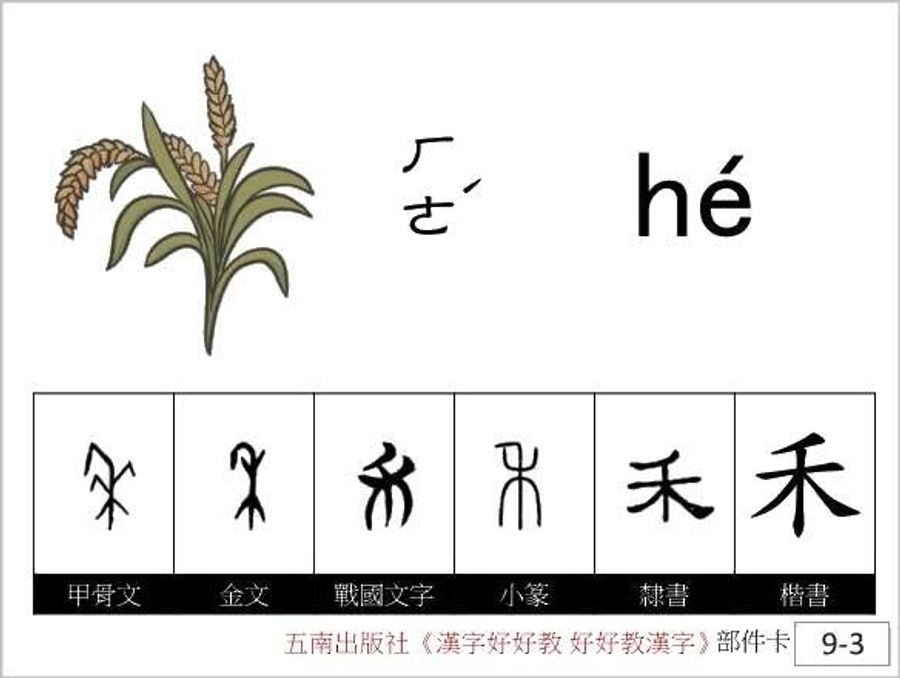
Coming next: in April we look at a smaller plant — the character 禾.
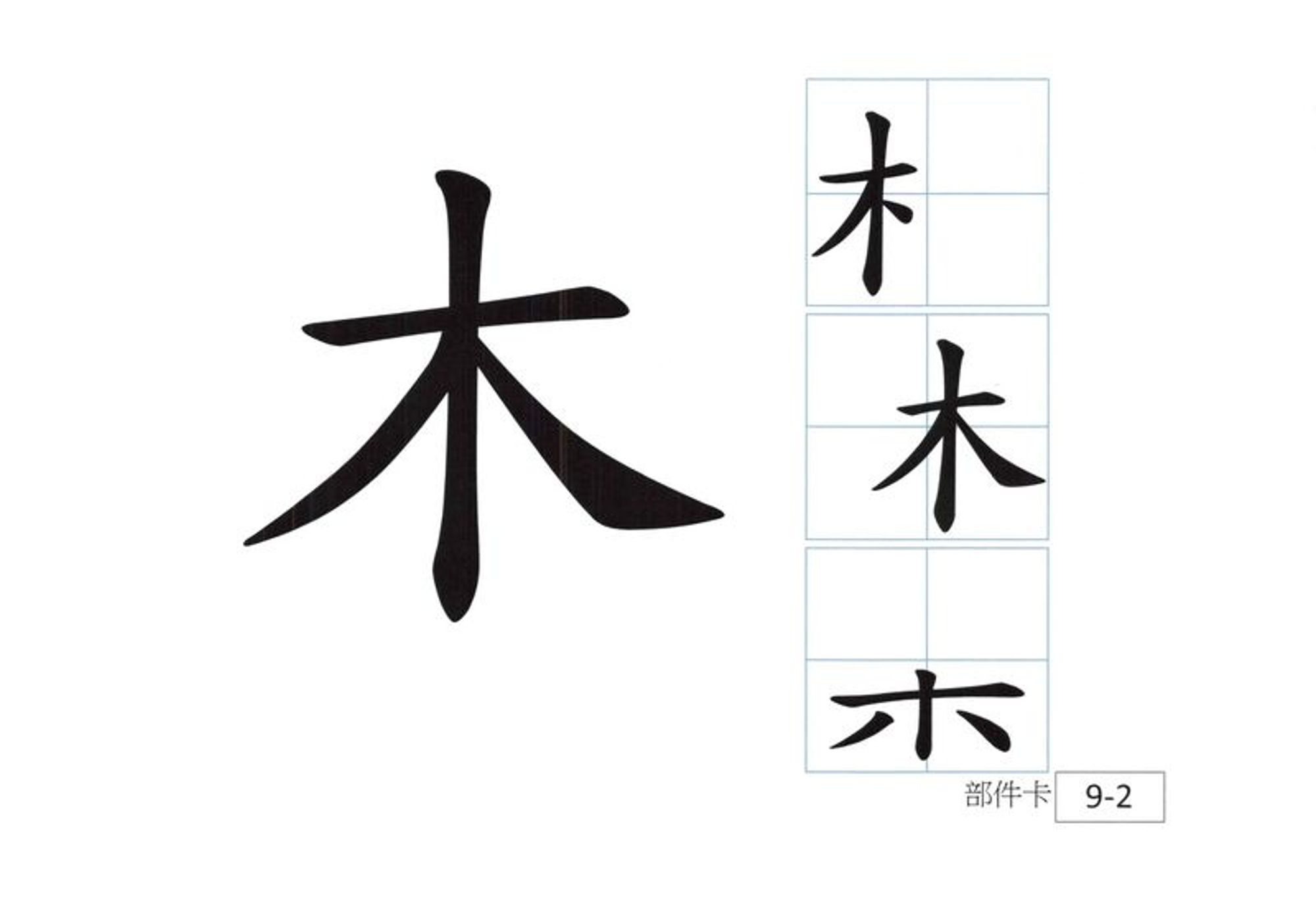
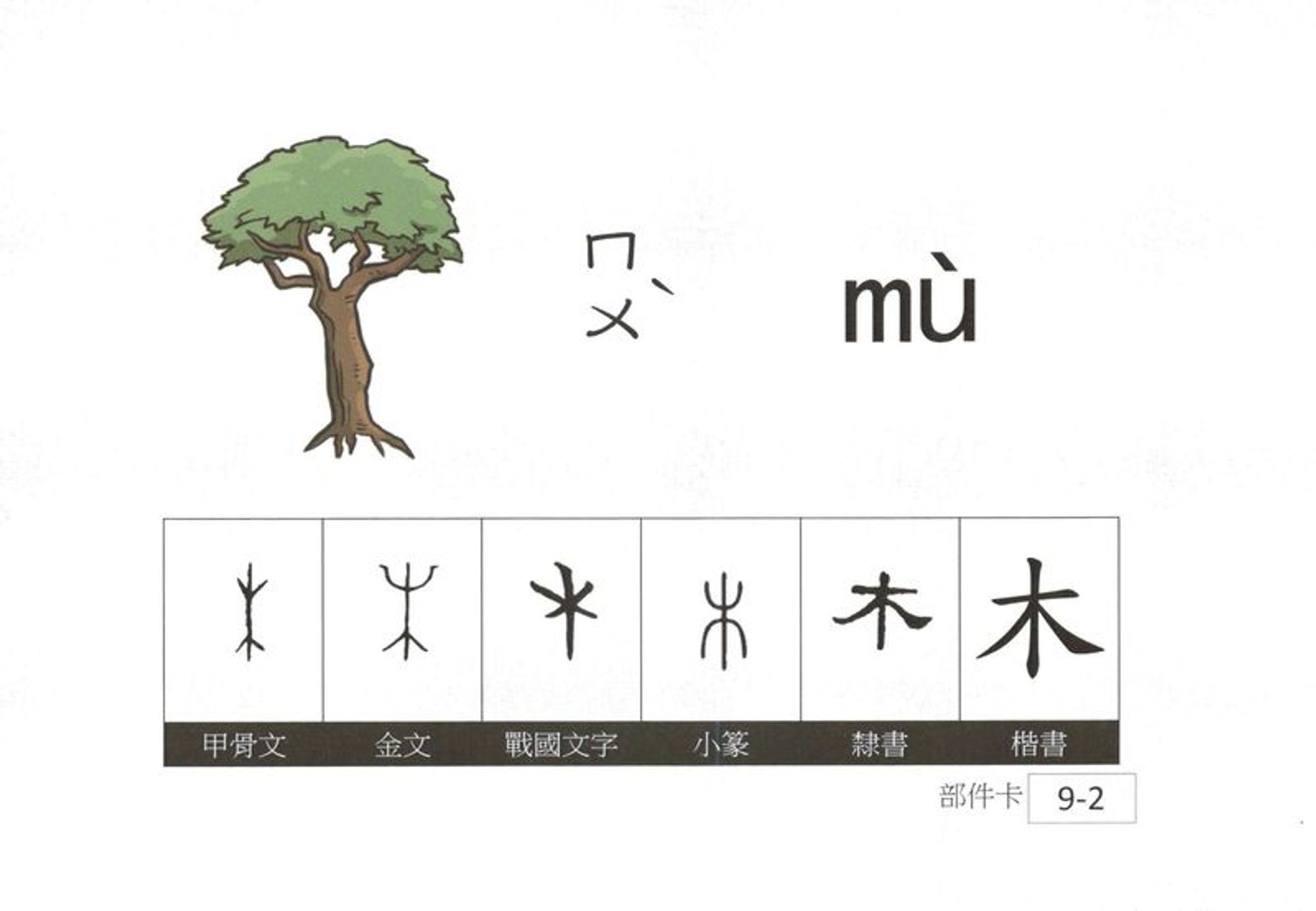
Images from the component cards of the book "漢字好好教 好好教漢字"